
A two-day camping plan can fall apart before the car even leaves the driveway. Rain may have made the access road soft. A high-water notice might have closed the footbridge. Someone could be wearing shoes of boots for muddy ground. The answer isn't to go for an trip. Good outdoor weekend planning treats conditions, access and group readiness, as decision points. Then it builds a trip that can adapt without becoming unsafe or a waste of time.
Set a go modify or cancel threshold
Start by knowing the conditions needed for travel. Check the forecast for the area, not the nearest town. Look at the trend across the time of the outing. Wind, heat, rain, snow, visibility and overnight temperatures often matter more than the high.
Turn the forecast into actions before you leave. Decide what would make you keep going shorten the route move to a campsite or cancel altogether. Persistent heavy rain for example can turn a stream crossing or unpaved access road into a problem. A brief shower may only mean you need layers and a slower pace. Strong wind can increase risks on exposed ridges, around branches and during camp setup-even if rain is not expected.
Don't mistake a forecast for a plan. Allow room for uncertainty. This is especially important in coastal or heavily forested areas. Check weather alerts and land-management notices close to departure. Check them again before committing to a route. Safety advice and access rules can change. Always verify guidance through the official agency.
Confirm access beyond the trail map
A trail on a map does not mean the whole journey is open. The road may be seasonally closed. Parking may require a reservation. A bridge may be out. A fire restriction may affect cooking and camping. Private roads and local access arrangements can also change without showing up on a mapping app.
Use information from the managing agency, park authority or landowner as your source. Look for closure notices, road conditions, permits, parking rules, water advisories and restrictions on fires or overnight stays. If details are unclear choose a destination with an access chain. Don't assume missing information will fix itself.
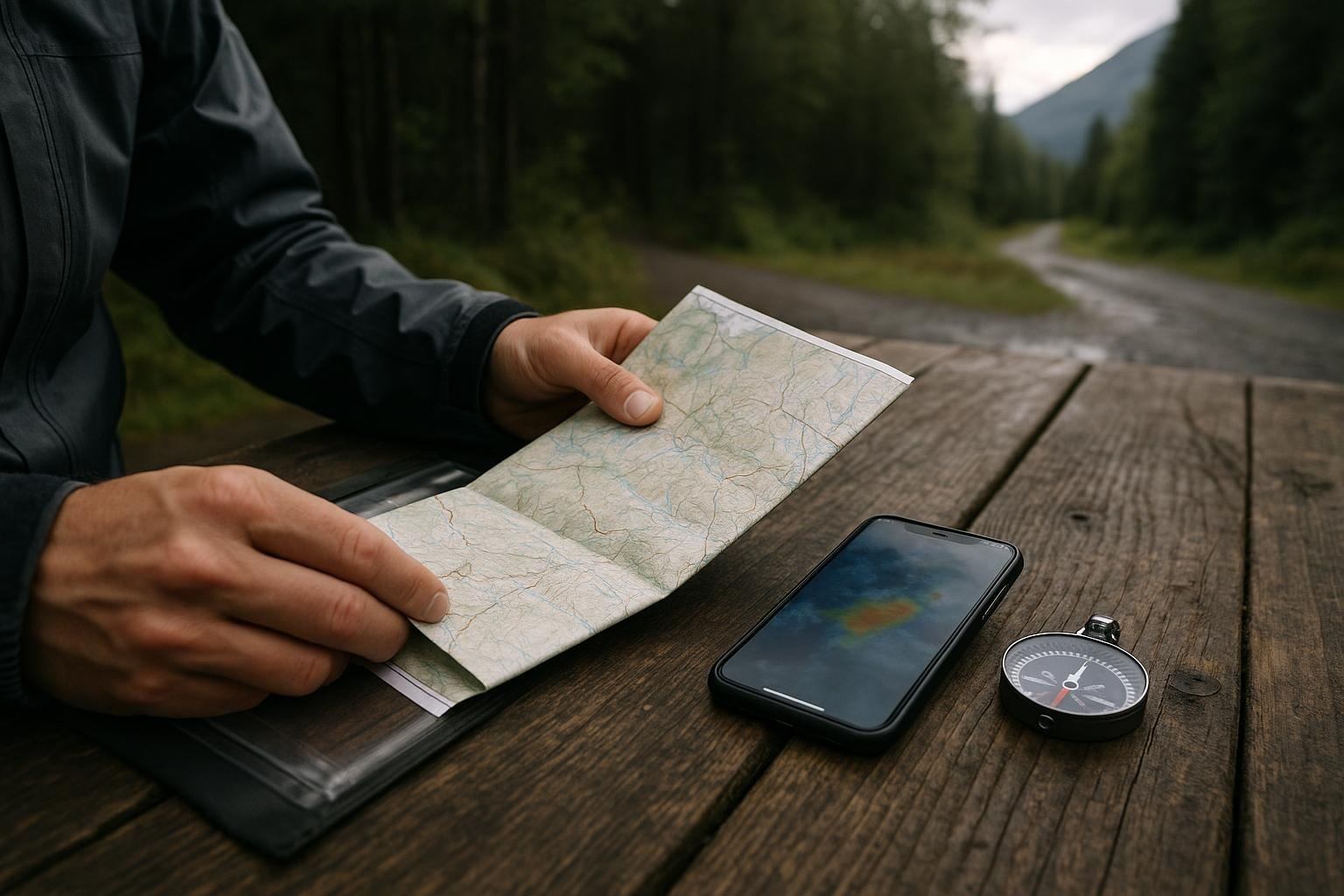
Build a turnaround point into the drive and hike. A route that looks easy on paper can become unreasonable when the final access road is rough.. The group arrives late.. Parking is farther from the trailhead than expected. Download maps for use. Save the access address. Carry a route that doesn't depend on one crossing or road.
Match the route to the person
The strongest member in the group should not set the pace. Match distance, elevation, terrain and remoteness to the person with the experience, lowest fitness or greatest uncertainty about the conditions. This isn't about lowering standards. It's about avoiding fatigue that turns into an emergency the rest of the group must manage.
Ask questions before leaving: Can everyone walk the planned distance while carrying their share? Is anyone managing an injury, medication need or heat sensitivity? Will the route still work if progress is slower than expected? A shorter loop with exit points may be better than a longer out-and-back with one section.
Share the plan with someone who is not attending. Include the destination, route, vehicle details expected return time and the point at which they should contact emergency services or local authorities. Requirements vary by location. Follow guidance instead of relying on an old template.
Pack for the failure you can reasonably expect
Build the packing list around problems, not categories. You need protection from the forecast enough water and food for delays navigation that works without a signal and ways to handle injuries or equipment failure. The route and season determine the items. The questions remain the same.
Before loading the car check:
– Weather- layers, rain protection and a warm spare layer
– Footwear suited to the ground plus socks
– Adequate water capacity and a treatment method when reliable drinking water is uncertain
– Food that remains usable if the trip runs late
– Offline navigation, a charged phone and backup power
– Headlamps or flashlights even for a day trip
– First-aid supplies suited to the group and route
– Shelter or sleeping equipment appropriate to the forecast
– Waste bags, including a way to pack out hygiene items
– Required permits, reservations, identification and emergency information
Test awkward items before departure. Confirm that the stove works the filter fits its bottle the rain shell still sheds water and the sleeping system is complete. A list cannot replace judgment. If conditions exceed your equipment or experience change the plan of adding another gadget.
Leave a footprint than the forecast
Conservation starts before arrival. Use established campsites and durable surfaces where local rules direct you to do. Stay within site or permit limits. Avoid widening trails by walking around sections. Short-term convenience can create damage that lasts beyond one weekend.
Carry out all waste, including food scraps and packaging. Secure food and scented items according to wildlife guidance. Never feed animals. Use toilets as directed. Where no facility exists, follow requirements, for human waste and hygiene. Fire rules change often. Never assume a familiar site allows a campfire.
The best adjustment is often the dramatic: leave choose a lower route replace a remote campsite with a developed one or postpone the trip. Conditions are part of the destination, not an inconvenience to defeat. A flexible plan protects the group respects access rules and leaves the visitor a chance of enjoying the same place.