
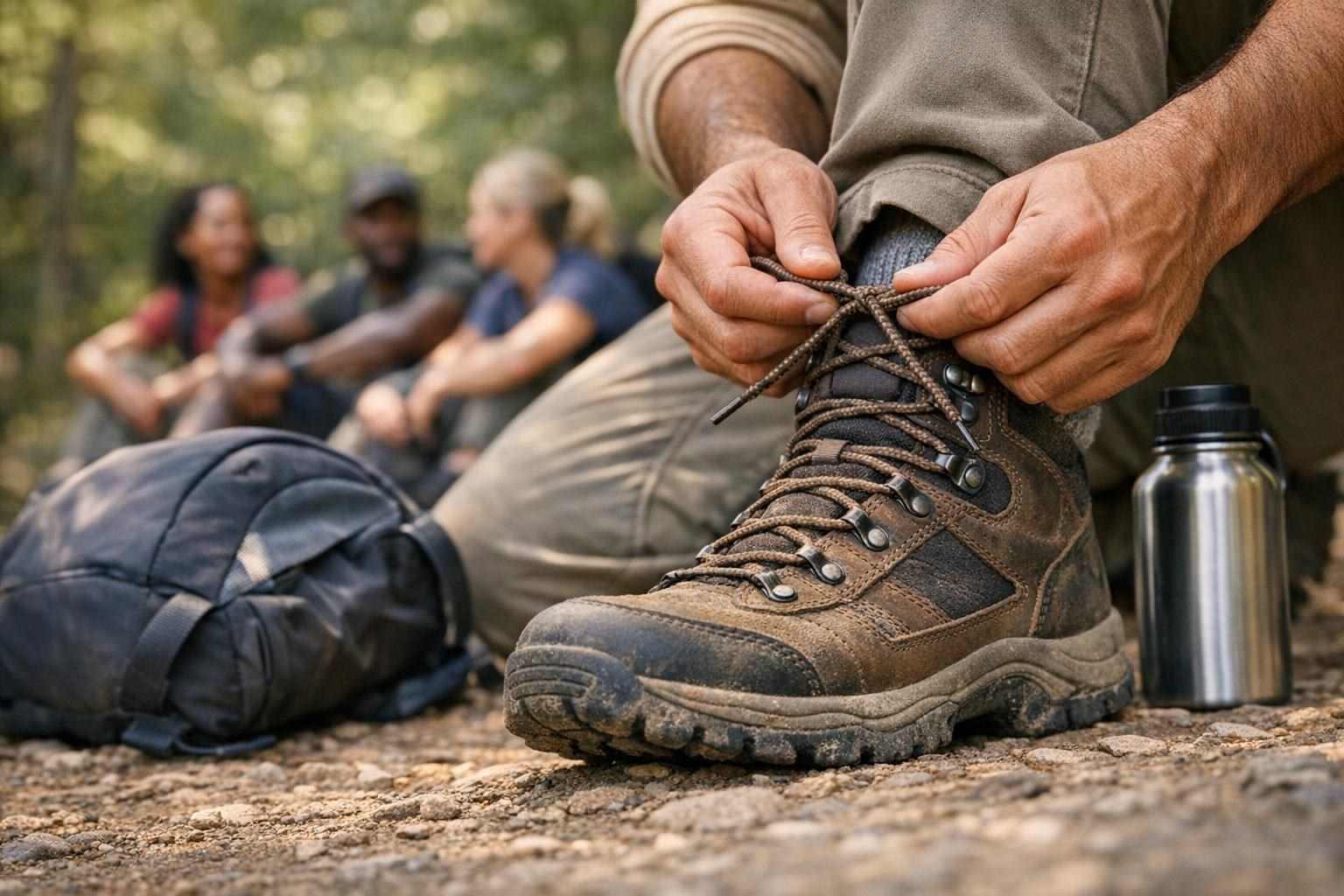
Even if a group is moving at a reasonable pace, by the time they reach the next junction they can be tired, thirsty and even a bit grumpy. This is not because of the distance, but because of the lack of useful pauses. One person needs to eat, another to sort out a boot, and they are all standing in an exposed and/or awkward place. The breaks need to be thought out to be as useful as possible and to allow for as much flexibility as possible on the day while still allowing for rest, trail safety and to be within a realistic time frame.
Start with the group's actual needs
All rest-stop plans should begin with an assessment of the hiker's experience and ability. Seek information on recent hill walking, estimated fitness, mobility restrictions, sensitivity to heat or cold and any additional weight that each party member is carrying. It is not necessary for each individual to disclose personal medical details. However, you need to ensure that the proposed route is not too demanding for the least experienced or less able hiker in the group.
Recognize that everyone's needs are different. Someone who wants more frequent snack breaks might not want a long stop to sit around and be stationary. But someone with sore feet might need a long stop to sit down and swap out their socks. Allow people to call for a short comfort break at any time if they're starting to feel any sort of pain or discomfort.
Consider also what sort of communication system will be in place during a break. How will the people at the front of the group know that everyone has arrived, or vice versa? Decide who is going to lead the group, who is going to bring up the rear and what will happen if the group does spread out. A break is only of use if everyone knows where it is.
Choose stopping places, not just stopping times
While planning a route on the basis of time is easy, terrain-based planning is generally far more useful. A shaded seat, a broad rock, a sheltered clearing or a viewpoint all make good stops. Narrow paths, loose ground, blind bends and approaches to drops all make lousy stops regardless of the time.
When reviewing a route, note possible locations for:
– A brief regrouping point where people can drink, check the map and let the back of the group catch up.
– A proper rest area where walkers can sit, eat and make small clothing or footwear adjustments.
– A decision point near a junction, difficult section or turnaround option.
By recognizing that a location that is suitable in dry weather is often unsuitable in rainy weather, or when very windy or very sunny, an alternate location can be identified for use on such days.
Don't set up a rest-stop in a sensitive environment such as near a gate, steps or an emergency route. If there is no alternative suitable spot for a short rest then take a shorter rest in a safe location.
Match the break to the work ahead
Don't assume every stop needs to be of the same duration or with the same objective. For example, a short stop prior to a hill might allow for people to rehydrate and to remove a layer of clothing whereas a longer stop after a very demanding section of the route may allow for people to eat some food and to change into dry socks.
Before exposed sections check that all members of the party have sufficient clothing, food and drink and that they are aware of the current weather and forecast for the rest of the day. Before a long descent sort out any loose laces, any hot spots and remove any items from open pockets that could cause damage or get lost. Near junctions make sure that everyone knows which route the party is taking and confirm this with all members of the party before they move off.
A long break can be a good thing, providing time for your group to refuel, and get back to full energy. But don't let them cool down too much, as the next climb can be a real chore. And the biggest trade-off is that a long stop can encourage a slow start, and then a slow time keeping. This is why it's so important to make a long break a purposeful one – i.e. eat, drink, check your feet over, re-check the route, and off you go.
Use "What needs fixing before we continue?" as a prompt to ensure that as a leader you are identifying the problems and enabling others to fix them rather than expecting them to show courage in the face of adversity.
Build comfort without overloading the plan
To be able to help everyone on the walk in small ways, advise party members to bring with them sufficient supplies of water and of food for small snacks, and a light insulating layer, plus some basic personal items. The amount needed will depend on the route, the weather, and on individual needs. Current local guidance on water, clothing, for example, should be taken into account.
However, even when you have stopped for a sit-down break, standing in a suitable place to remove your packs and take off socks etc. can be far more comfortable than lowering your pack to the wet ground! Also, even though you have stopped for a rest, it's essential that people can adjust their socks etc. before any soreness turns into an injury. Remember not to share medication or treat any illnesses or injuries that you're not trained to in adventure activities. If someone develops a serious illness or their injury worsens, call for emergency help and retire back down the mountain.
Even the shortest of stops can require as much planning as the rest of the route. What type of food will be best for the party to consume whilst stopping? Will it be something that can be easily eaten and then tossed in the trash with all of the other waste such as wrappers etc. or will it need to be packed out? As with any adventure, a responsible plan for the stop must be included in the overall plan for the route.
Keep the schedule flexible and the retreat clear
Instead of treating each planned stop as fixed, try using estimated windows of time to allow for the natural variabilities of groups, and for all group members to reach a stop before it becomes inferior to a later alternative. Decide as a group whether a stop is to be taken early, or not at all.
Decide on a turnaround point or retreat point before you set off. This could be at the time of day, worsening weather, group tiredness, a badly damaged trail or that the group can no longer travel safely. Be sure to check current official government guidance and any relevant land-management notices before heading out.
Make a very quick check at each rest-stop to see if everyone is present and if they need any food, water or clothes changes. Look at the route in front of you and see if it is still safe enough to continue on. Has the weather changed while you have been resting? And have you left the place as you found it?
The best rest-stop plan for any group of people is a flexible plan that allows for sufficient space to rest comfortably and for people to communicate with each other and make good decisions. For a mixed-ability group undertaking a demanding day's adventure, flexibility is key to ensuring that the experience is shared by all and not a mere race watched by spectators.